

Not-so humble leeks
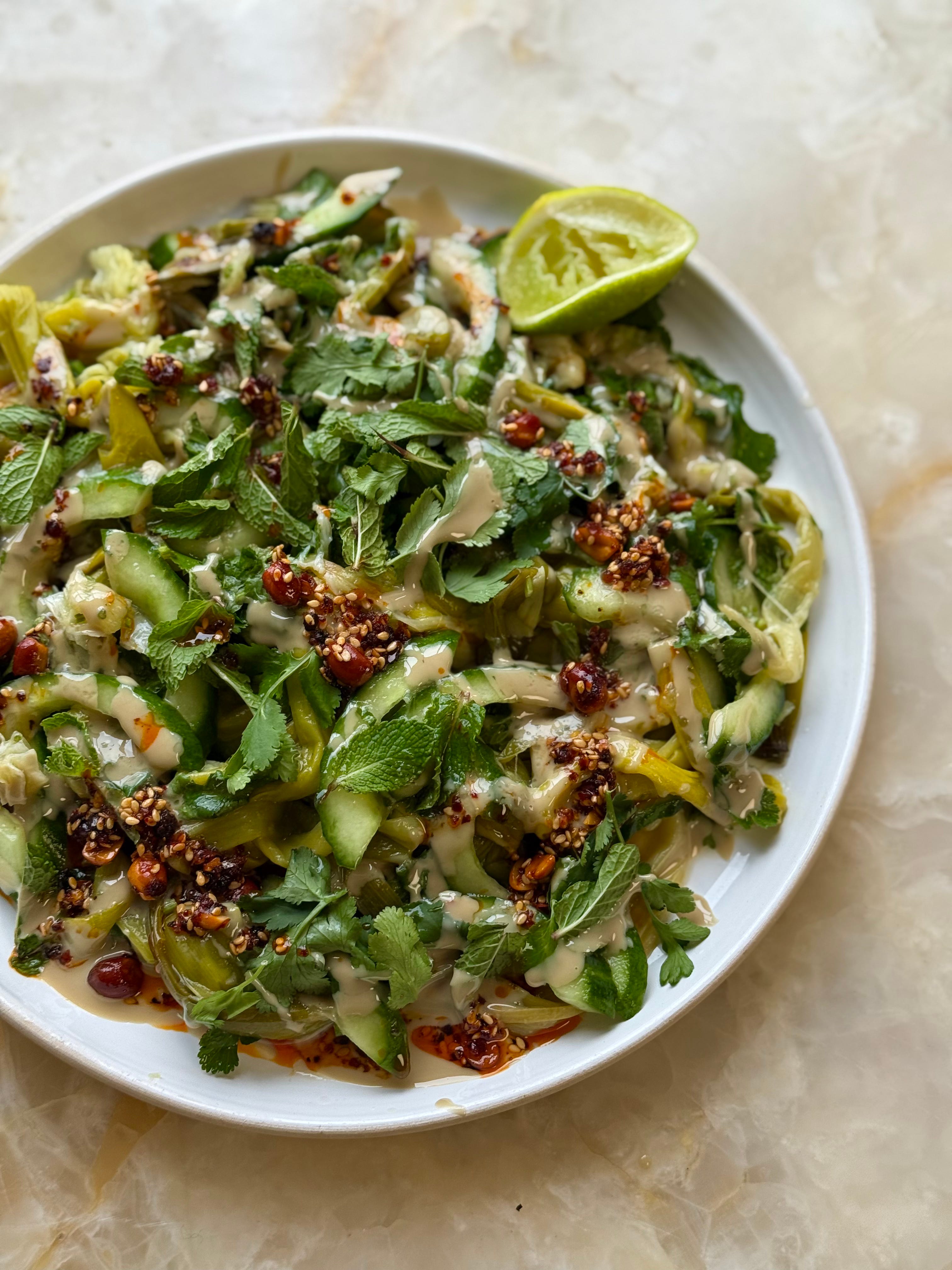
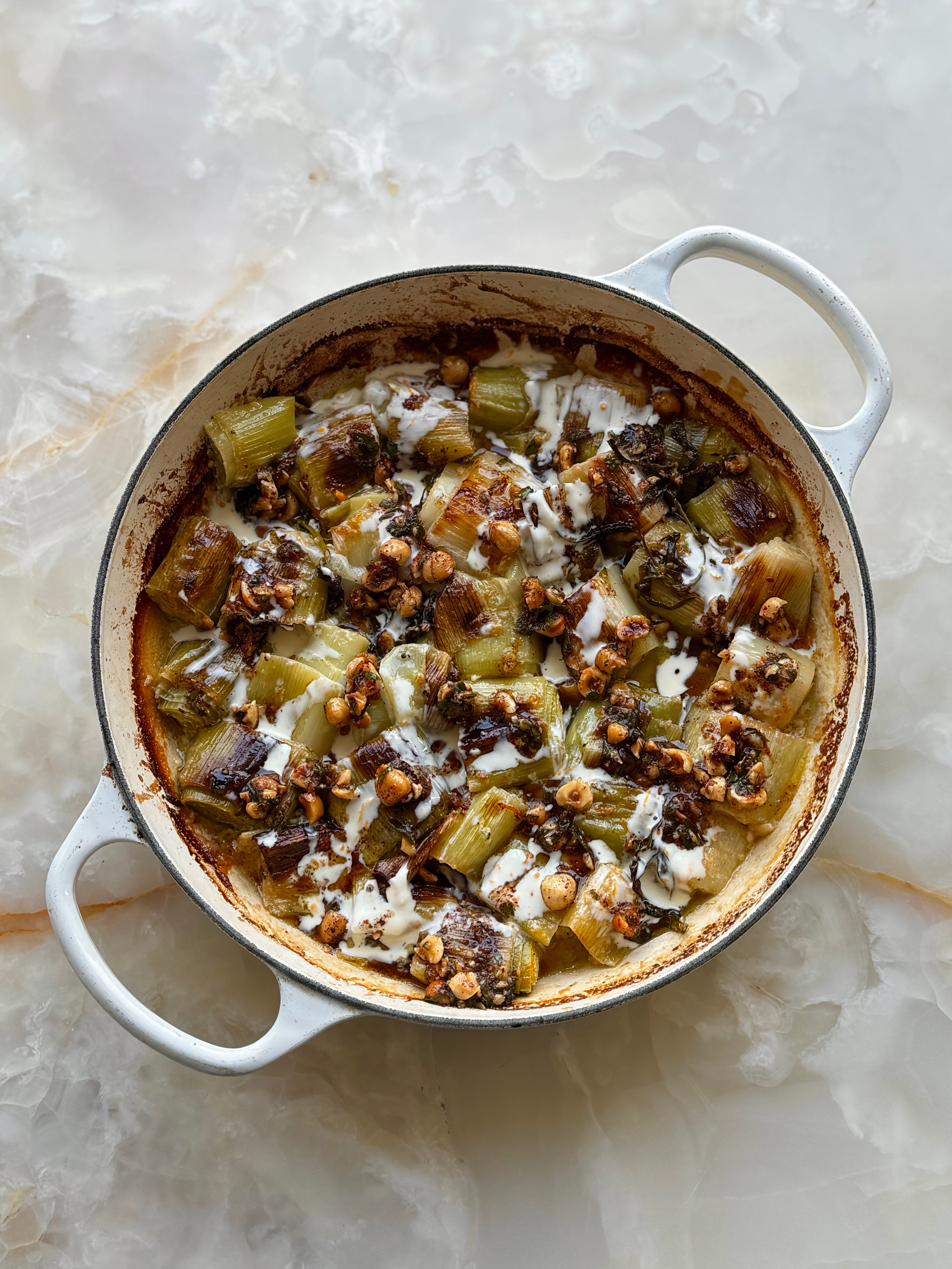
Pulled leek “noodle” salad, plus roasted leeks, crème fraîche, hazelnuts and sumac

Someone recently sent me the following question: “Why do all recipes say this - ‘bring to the boil, reduce the heat, and leave to simmer…?’”
I am not completely sure what’s behind this question, but I assume it’s a dig at those familiar yet vague, even meaningless, conventions of recipe writing. There’s plenty of them: sauté until fragrant or translucent or golden-brown; a rich and velvety texture; a good crack of black pepper; finish with a drizzle of x or y; deglaze the pan; sweat the aromatics; caramelise.
Technical jargon, mixed with idioms and cooking clichés, can be irritating, but recipe writers use them all the time. I do, too. It’s a way to signal something to someone who knows a thing or two already, dressed up as fresh information. That’s the annoying bit: if you don’t know what you’re doing they are no use to you at all (I am thinking about the hysterical fold-in-the-cheese scene from Schitt’s Creek), and if you do then, well, who the hell needs them?
And yet… we do. The procedure of bringing something to the boil and then simmering it on low heat until it’s ready is just, well, cooking. But no one wants a recipe that only says: cook the food.
The same principle applies to the way we describe ingredients (hefty, lowly, luxurious) and this week’s star, leek, is often referred to as ‘humble’. I have come out against this definition before. Just like the bring-to-the-boil convention, it captures something but doesn’t tell you everything. The humble bit refers to the fact that leek is a cheap ingredient that does much of the heavy lifting flavour-wise but is rarely celebrated or put right at the centre.
So today, as I often do, I am on a mission to salvage the reputation of an overlooked ingredient. Yes, there are more burning issues right now than leeks, obviously, but if you’re in the northern hemisphere, they’re one of the few things thriving at this time of year - late winter, early spring, when not much else is growing – so they’re worth your while.
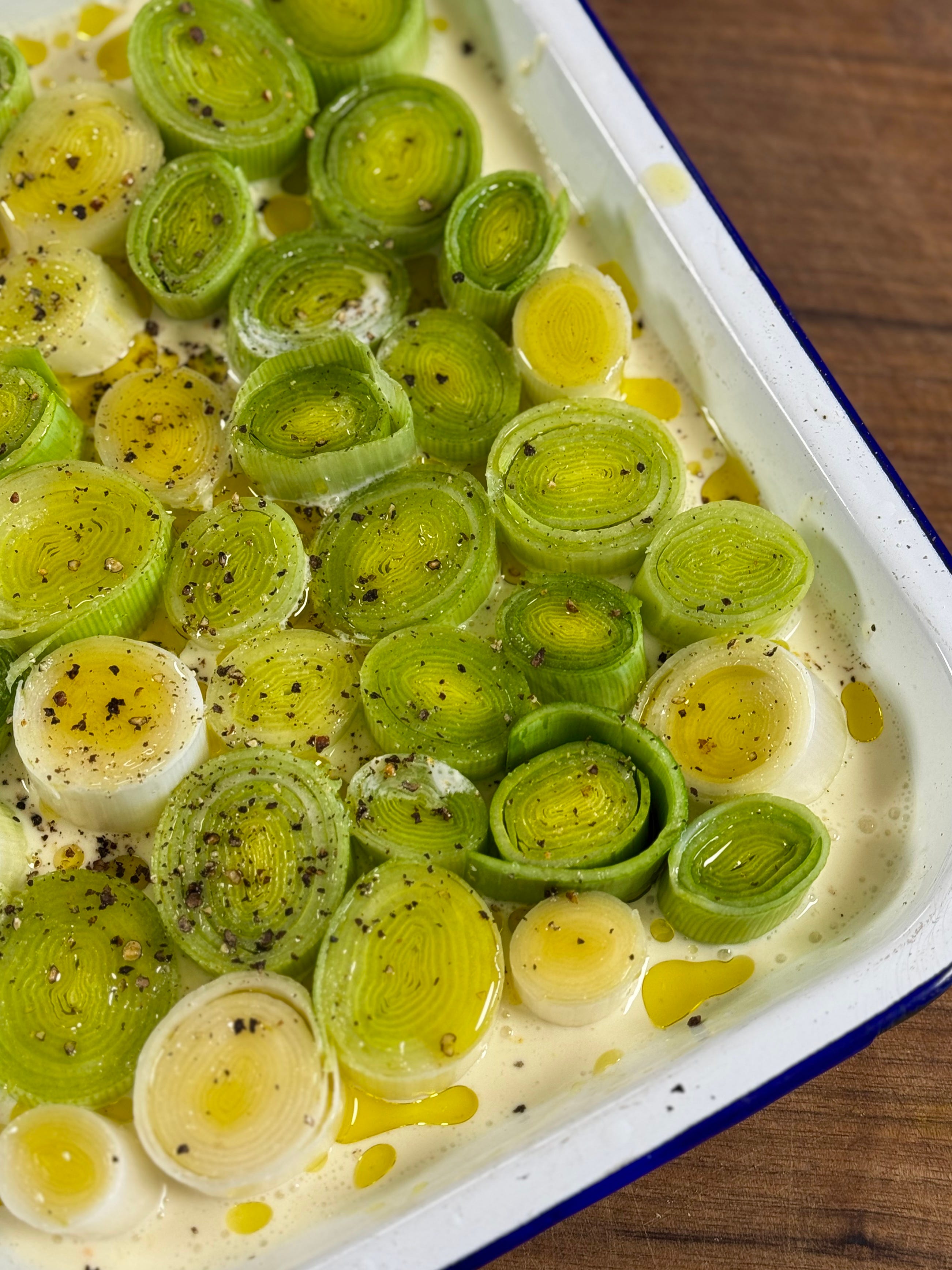
Leek’s ability to transform completely from one thing when raw to another when cooked is dramatic. Eating thick slices of raw leek is never going to be a winning idea. They’re harsh and fibrous. But those same slices become tender and sweet when roasted slowly with olive oil. At ROVI, we often burn leeks whole over flame - the exterior blackens and chars until it resembles charcoal. We peel back those outer layers, revealing a soft, smoky interior underneath.
This is what leeks do best. They don’t stay what they were. They’re not fixed or predictable. They are humble, in a way, but they can also be the star of their own show... Yes, I just had to finish with a cliché.
Roasted leeks with crème fraîche, hazelnuts and sumac
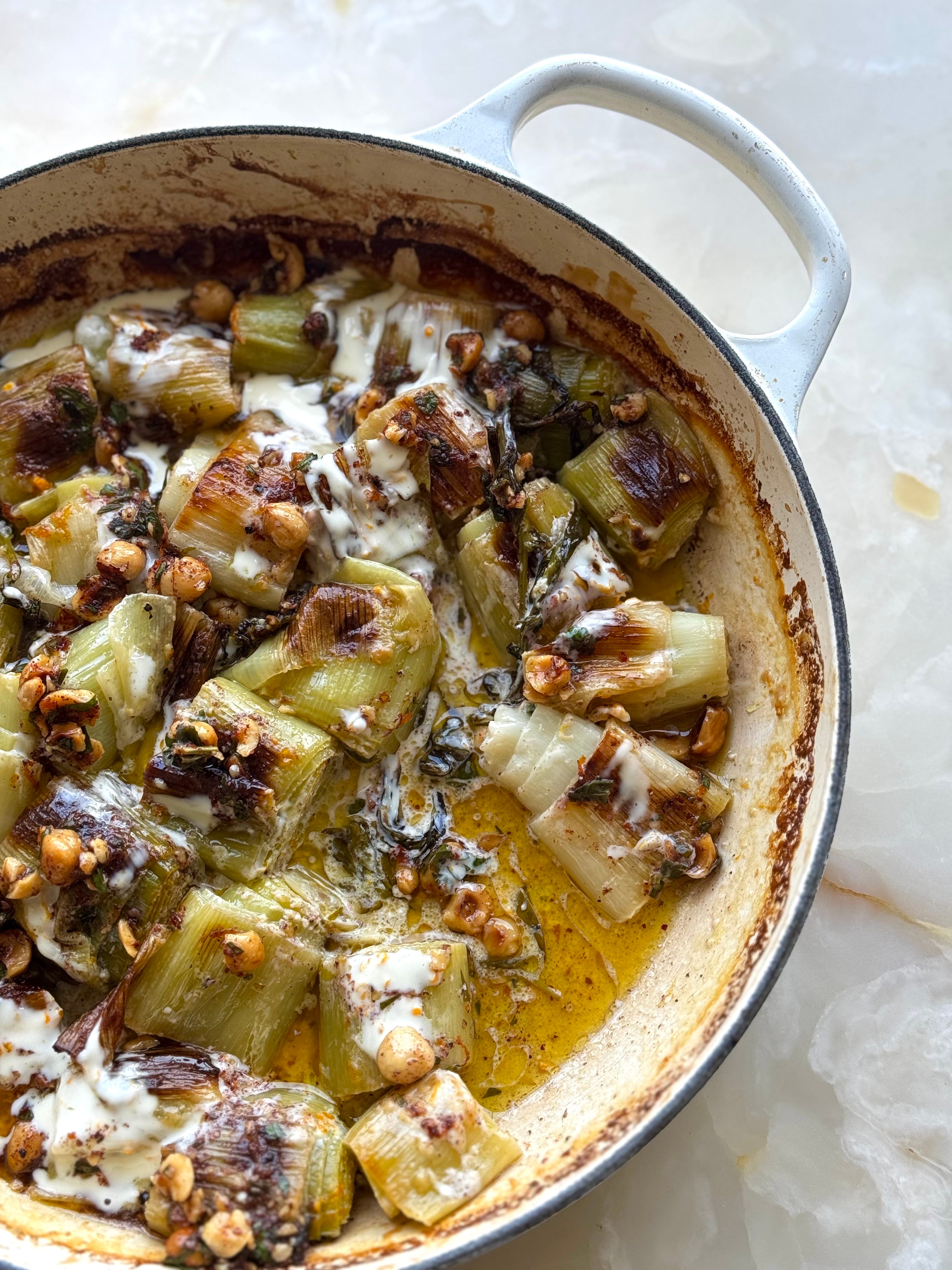
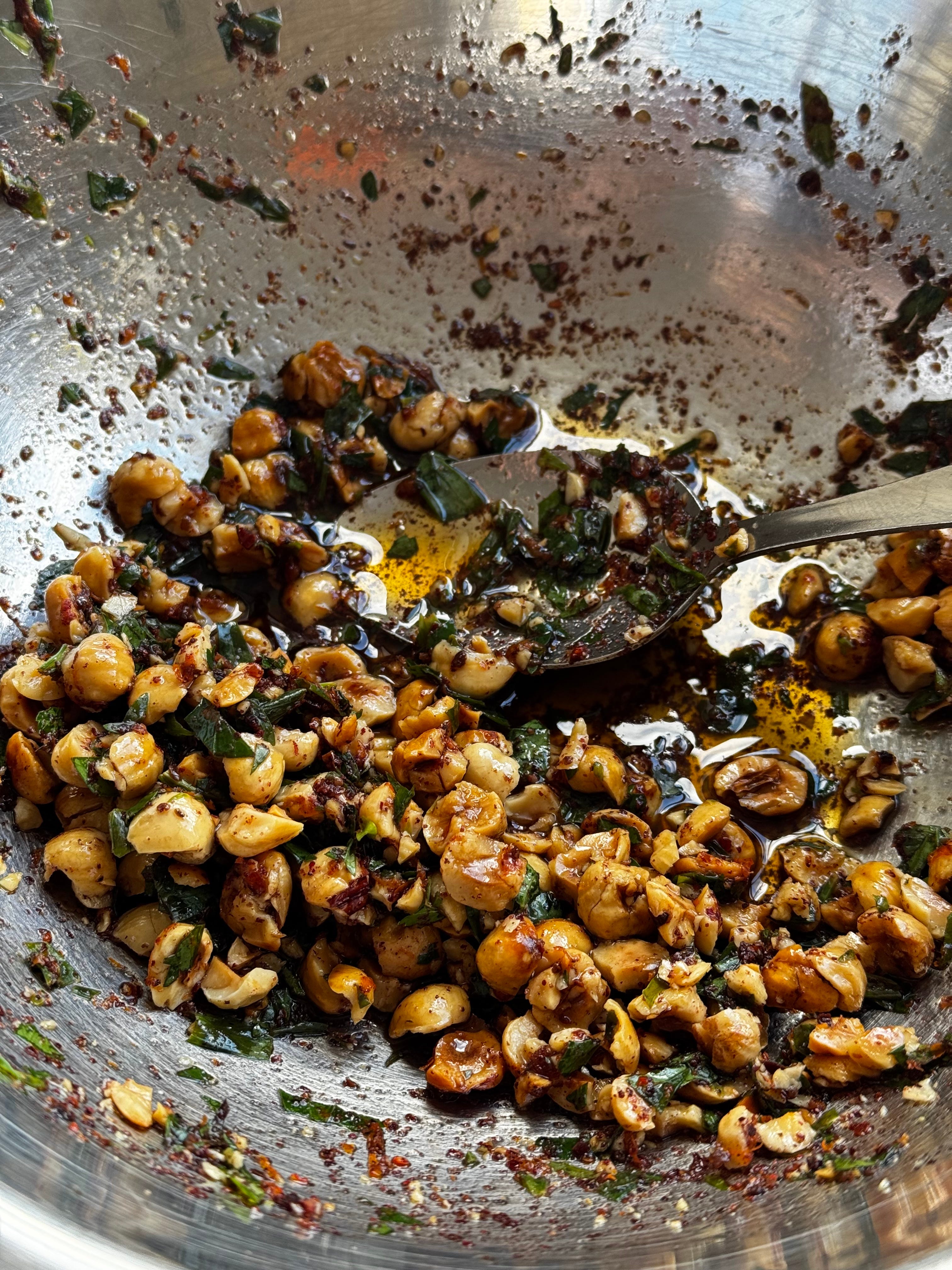
Early spring is the perfect time for leeks. After the cold winter frosts, they develop a natural sweetness that, when roasted at high heat, creates deep, rich flavours. Here I serve them with a citrusy crème fraîche and hazelnut, orange and sumac salsa. It’s perfect as a side for roasted chicken or fish.
Pulled leek “noodle” salad with tahini and chilli crisp
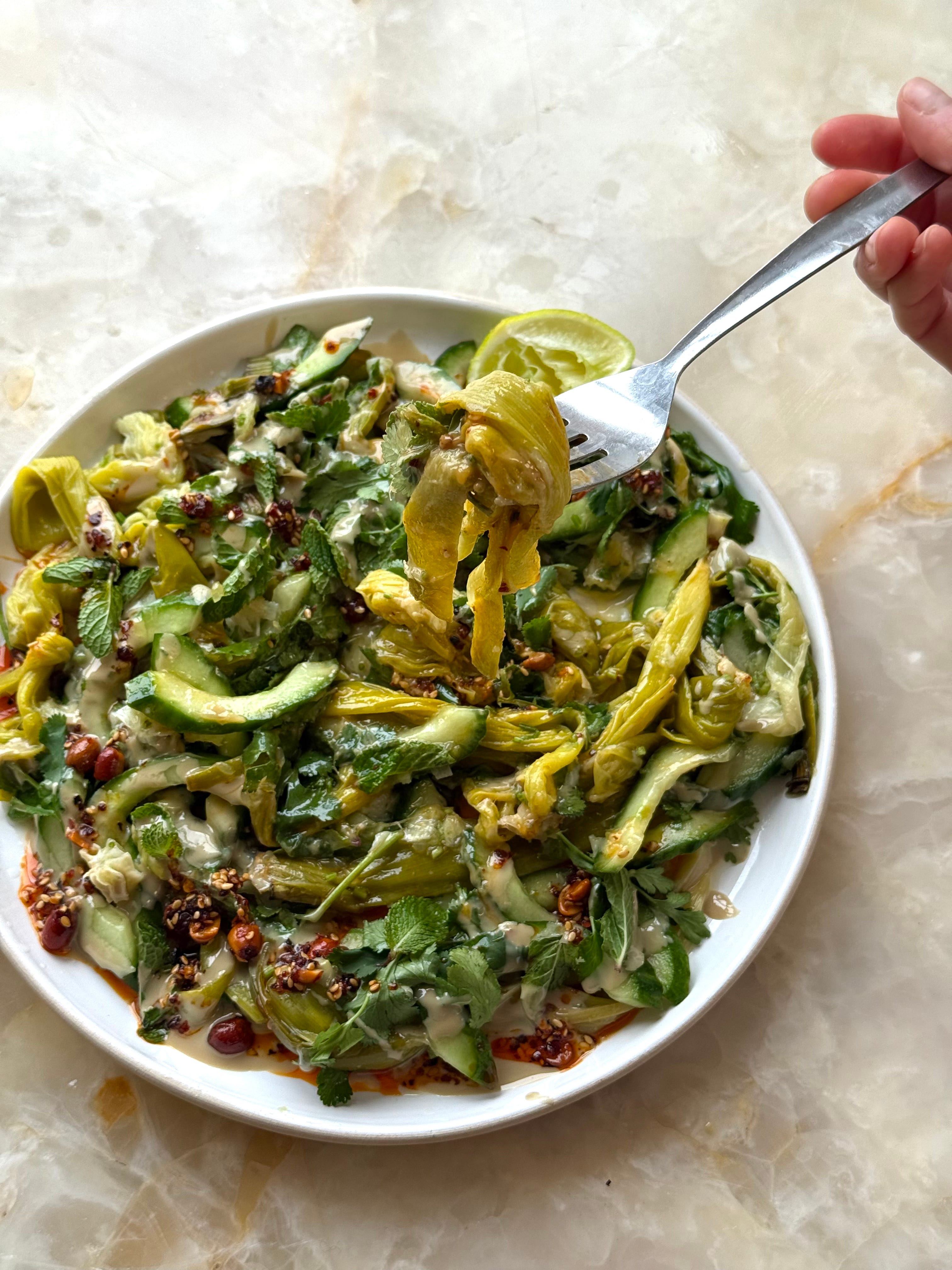
Preparing leeks in this way, by roasting until very tender and then pulling the layers apart, creates a texture that is almost like thick noodles. You can prepare this a day in advance and store all of the elements in separate containers. Dress the leeks just before serving to keep everything fresh. Peanut rayu adds a lot of texture to the dish so if you are using plain chilli oil, add some roasted peanuts.
