

Get to know rhubarb…
Is it a root or is it a fruit?

This week, I was sent the most unexpectedly beautiful six minutes of film I’ve seen all year. I watched it over breakfast, half-asleep, but still absorbed. It follows the Cook family in West Yorkshire (during their Spring harvest)– fifth-generation rhubarb farmers who harvest by candlelight in vast, cathedral-like sheds (the darkness prevents photosynthesis and keeps the rhubarb bright-pink and tart).
In the darkness, you can actually hear the rhubarb growing - a soft creaking and popping as the stalks push upward, desperately searching for light. It's a technique that goes back millennia - I was hypnotised watching the family work with such care; generations that have perfected just one thing.
The Cooks are situated right in the middle of the Rhubarb Triangle in West Yorkshire, where at one point, 90% of the world's forced rhubarb came from this tiny patch of land. The people of Wakefield are so proud of this heritage that they've got a permanent exhibition dedicated to it. An entire exhibition!
After watching, I couldn't help but drag my test kitchen team into my newfound rhubarb fascination…and together, we’ve gathered all the rhubarb intel you need.
(BTW, these same filmmakers also created an amazing video of an all-male choir singing an ode to rhubarb... I promise I'm not making this up.)
There are two kinds, and knowing the difference changes everything…
Forced rhubarb (January to March): Grown in those dark sheds, producing stunning pink stalks. 'Forced' sounds aggressive, but it's just a very old farming technique. The complete darkness makes them grow upwards – searching for non-existent light – and develop an incredibly beautiful pink colour. It's more sweet than summer rhubarb, which grows out in the fields. For me, this is the holy grail of rhubarb.
Field grown rhubarb (April to September): Grown outside, a bit tougher, slightly less vibrant, and less sweet than forced. Still delicious.
Cooking with rhubarb
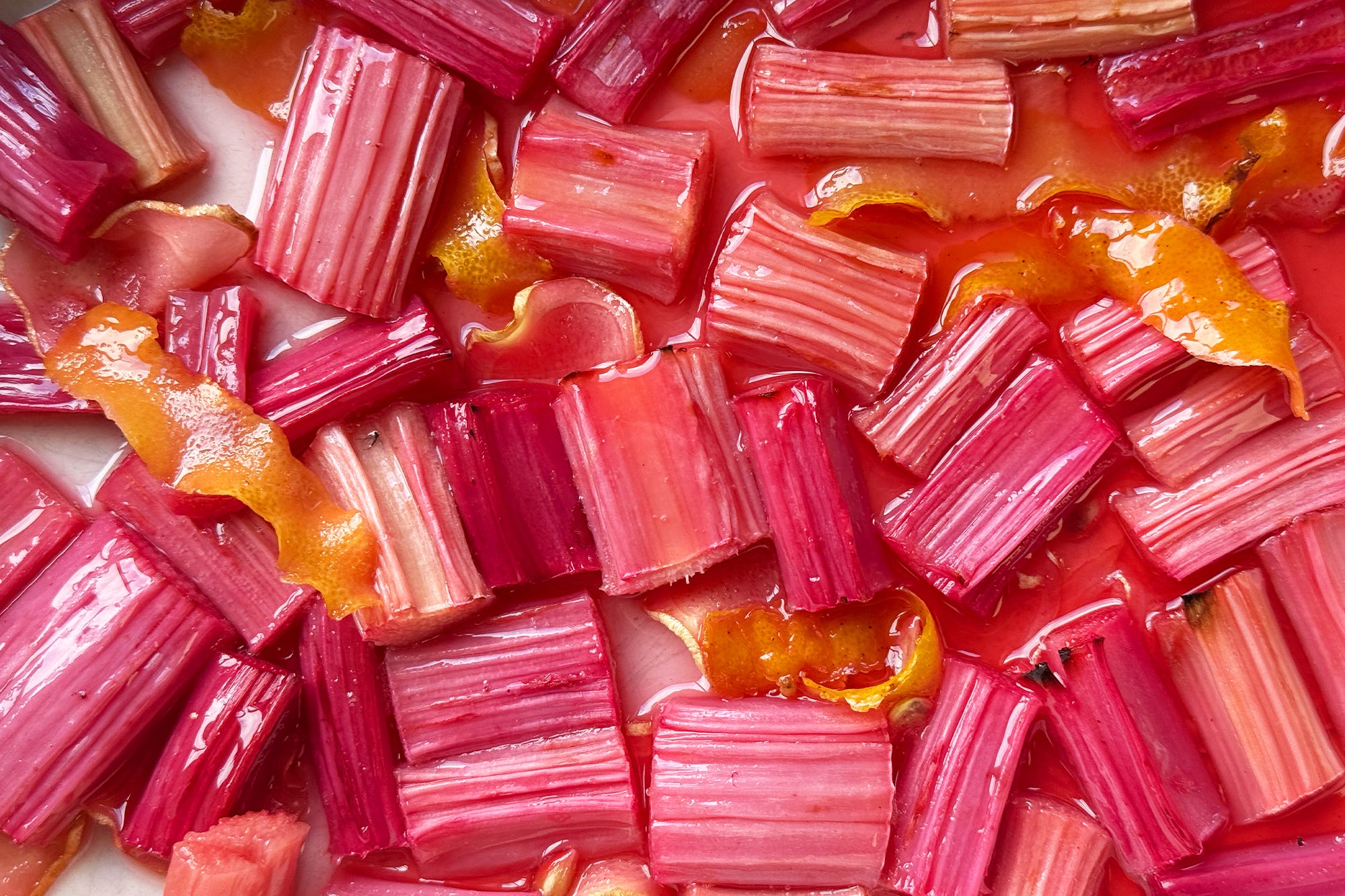
Roasting is the perfect method. You want it just softened but still holding its shape. Check it frequently – rhubarb can go from perfect to collapsed in minutes.
I love stewing it too, especially with a cinnamon stick, sometimes star anise, occasionally cardamom pods. The liquid released creates its own sauce, which spooned over thick Greek yoghurt with a drizzle of honey is perfect for breakfast or pudding.
Baking gives you those pink streaks coming through cakes and muffins. Some cut the rhubarb too small, and it dissolves into the batter. I prefer larger chunks – 2cm pieces – which maintain their shape, creating pockets of sharp contrast to the sweet crumb around them. There's a Swedish cake called Rabarberkaka that showcases this beautifully.
Raw rhubarb is divisive. But shaved into whisper-thin ribbons with a mandoline, it adds a freshness to desserts that can otherwise become cloying. I like to macerate it briefly with a tiny bit of sugar and lemon juice – just 10 minutes – to soften it slightly while maintaining that characteristic crunch.
Beyond the crumble
I use rhubarb in savoury dishes as well– a little acidity to cut through the richness of lamb or duck. You can try lamb tagine with chunks of rhubarb added in the last 15 minutes of cooking – just long enough to soften but not dissolve completely. Or pickle thin slices with star anise, a splash of vinegar and a pinch of salt and serve alongside grilled mackerel.
Spices like sumac and baharat complement rhubarb's natural tanginess in ways that might surprise you. There's a whole world beyond the strawberry-rhubarb pairing (though that is, of course, a classic for good reason).
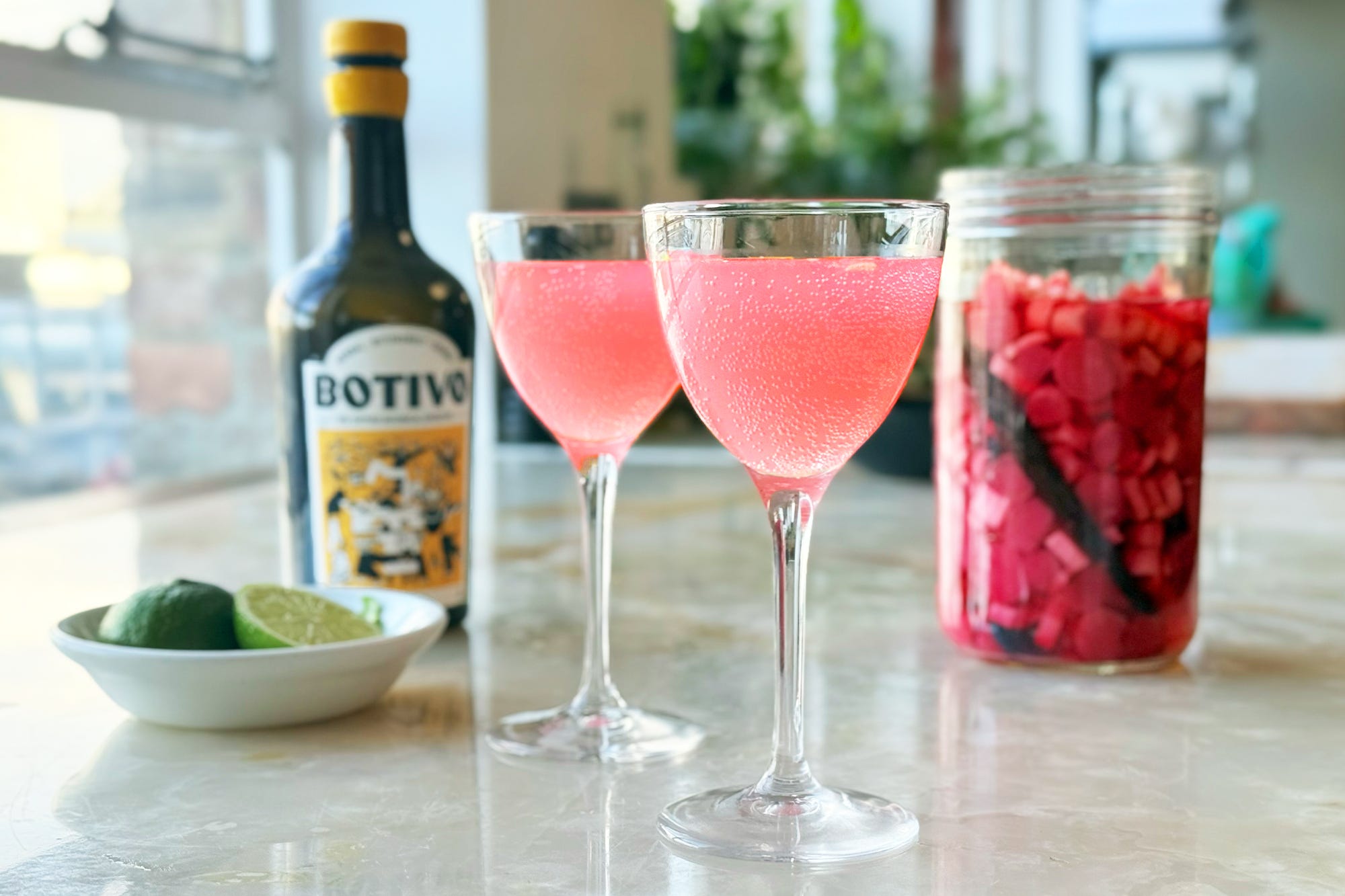
I'll talk more about cooking with rhubarb this Saturday, but for now, here's a simple cordial that I made as soon as forced rhubarb came into season this year (and a mocktail that includes one of my most recent discoveries, Botivo). Most cordial recipes involve cooking down the fruit, but there’s a cheat's method using boiling water—it sterilises, softens the fruit, and dissolves the sugar in one go. The leftover rhubarb pieces are amazing spooned over yoghurt or labneh.
Rhubarb Cordial
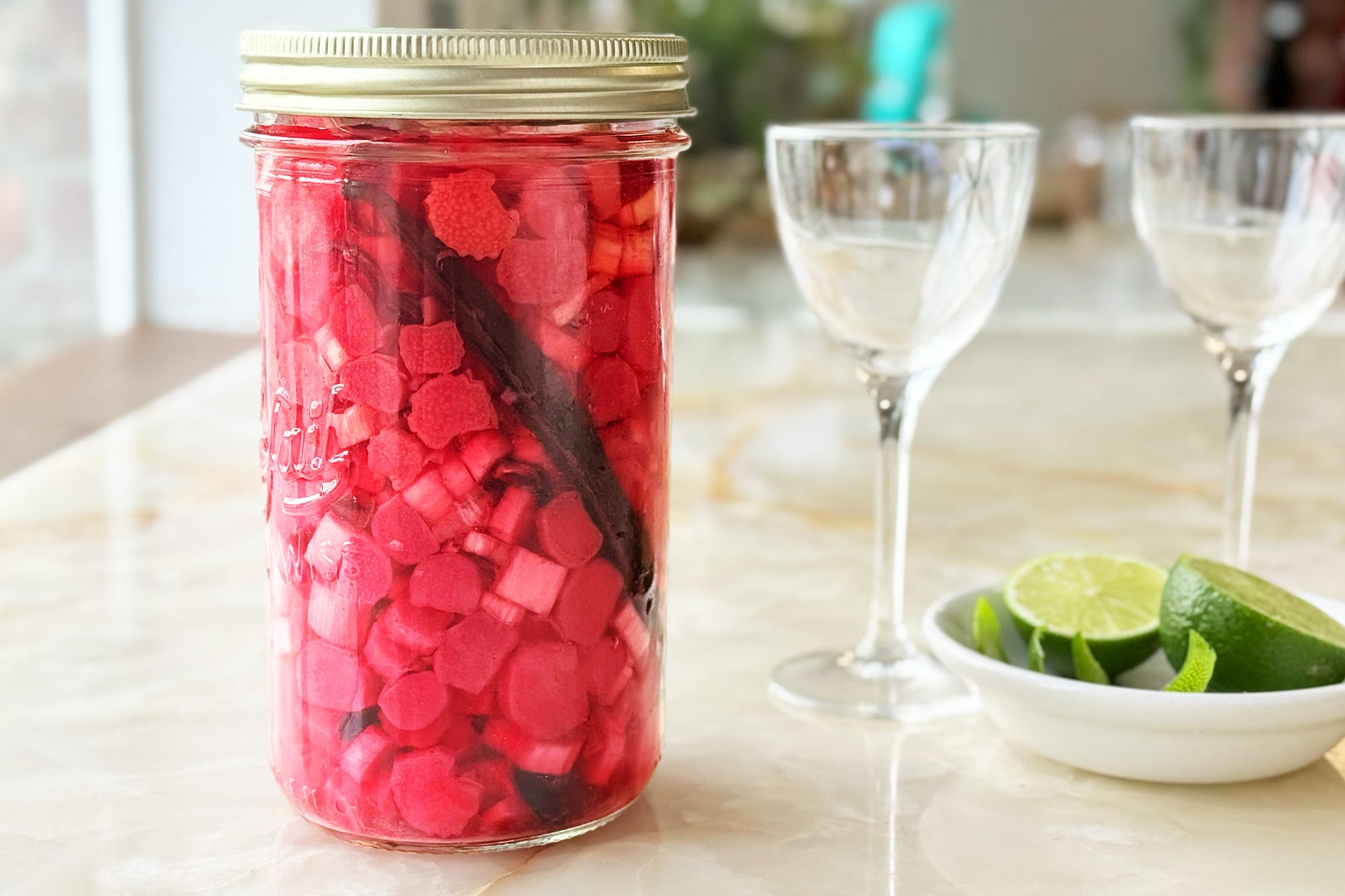
Makes 1 jar
Ingredients
CORDIAL
460g rhubarb, cut in ½ cm thick slices
220g caster sugar
5g dried hibiscus flower
1 spent vanilla
30g ginger, thinly sliced
FOR ONE COCKTAIL
Ice cubes
45ml rhubarb cordial
1 tbsp Botivo
150ml fridge cold sparkling water
1 lime, cut in quarters
Method
Place all the cordial ingredients in a bowl and mix well. Place in a sterilised 1L jar and cover with 300ml boiling water. Use a piece of parchment to push the rhubarb down, cover with a lid and refrigerate. Allow to macerate for 3 days, until the rhubarb is soft.
To make one glass of cocktail, fill a short glass with ice cubes. Pour in the cordial, Botivo and water. Squeeze over some lime, stir and serve.
My favourite rhubarb recipes…
Roasted rhubarb with sweet labneh
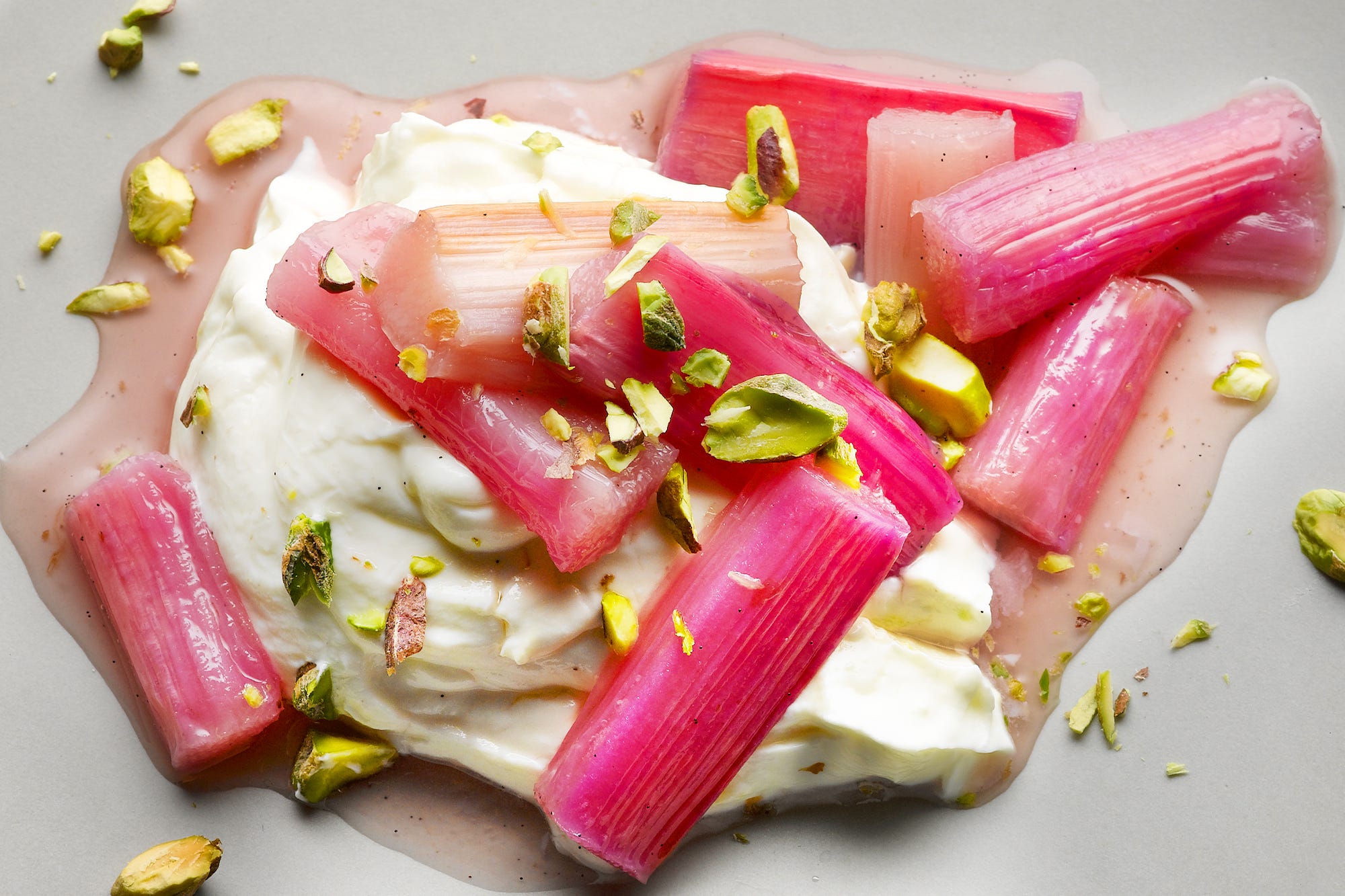
Tomato, rhubarb and elderflower salad

Vanilla custard with roasted strawberries and rhubarb

Sheet-pan chicken with rhubarb and red onion
Duck with rhubarb jam and pickled cucumber

These rhubarb and apple compotes you get in France. My colleague Clodagh brings them back for her kids (sort of an equivalent to apple sauce) but the test kitchen and I love them equally as much as her little ones.
P.S. This Saturday, I'll be back with two rhubarb recipes. One sweet (a simple rhubarb fool), one savoury (a Persian-inspired herby, chickpea stew). Grab some forced rhubarb in your shop if you can get it, field-grown if you can't.
We all scream for 'rhubarb'!!! It's almost May and every year we anticipate what will spring forth from our four rhubarb plants ...and then comes the pies, galettes and compote (to top vanilla ice cream). Thank you so much for these additional and inventive ideas 🙌🏼
Can the cordial be stored after you’ve made it but then opened it to use it, in case you only use part of it? Also, a word about storing fresh rhubarb would be useful. I clean, dry and then wrap it in paper toweling and put that inside plastic wrap in the refrigerator. What methods do other people use?